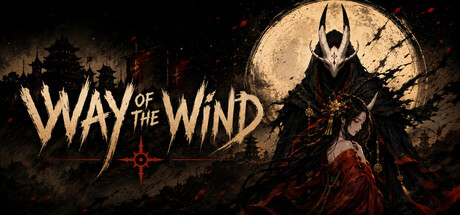
Way of the Wind

Way of the Wind
Current players
0
24h peak
0
30 day peak
0
Release date
Coming soon

About game

Civilization is an experiment built atop older experiments.

Every generation inherits a world it does not understand.

The purpose of the rituals has been forgotten.

The gods are conducting tests.

The archives are incomplete.

The dead continue to influence the living.

Every solution leaves a scar for those who follow.

Inspired by forgotten kingdoms, impossible saints, emergent systems, and the things that survive them.

About This Game

Way of the Wind is a terminal-born feudal Japan strategy roguelike about building a clan, raising heirs, surviving ogres, and watching a living world grind forward whether you are ready or not.

You begin small: a wandering household, a fragile camp, a few names worth protecting. From there, the world opens into a strange ASCII Japan of roads, cities, markets, castles, rival factions, family lines, secret systems, and consequences that do not politely wait for the player.

This is not a clean tactics board. It is a living machine.

Cities grow, decay, trade, starve, arm themselves, send caravans, produce heirs, remember harm, and fall under pressure. Roads matter. Buildings matter. People matter. Your family matters. Every year pushes the simulation forward.

Build a Clan

Ogre Shader is the base human unit of action. Heirs are cheat resources.

Your heirs are not disposable menu icons. They are your future.

Raise a bloodline, assign roles, send family members into danger, build up cities, defend what you own, and decide how much of your dynasty you are willing to risk for power. The world can be survived, conquered, inherited, or lost.

Children become successors. Successors become commanders. Commanders become legends, failures, ghosts, or liabilities.

The clan is the save file.

Rule a Living Japan

Move across a stylized terminal map of Japan and interact with cities, roads, markets, castles, shrines, villages, and hostile infrastructure.

Each city has its own pressure state: food, money, morale, defense, labor, attention, corruption, and stability. Buildings are not decoration. A castle, market, shrine, barracks, farm, spy network, or dojo can change what a city produces, how it defends itself, and what kind of future it creates.

The world is readable, inspectable, and mechanical — but never fully safe.

Fight, Fail, Adapt

Combat is fast, strange, and consequential. Units have roles, abilities, momentum, and matchups. Some fights are clean battles. Some are desperate interruptions. Some are bad ideas you walked into because the map looked quiet.

Victory can open routes, protect people, create heirs, or secure territory.

Failure can wound the entire run.

Ogres Are Not Just Enemies

Ogres are a faction, a threat, a ritual system, and a pressure source. They raid, capture, distort, bargain, and change the world around them. Their presence bleeds into the economy, the map, the family system, and the hidden machinery underneath the game.

Sometimes they are a battle.

Sometimes they are a disaster.

Sometimes they are the interface.

Bratbox

Buried inside Way of the Wind is Bratbox: a strange voiced terminal system built from recorded lines, personality fragments, unlocks, and reactive ritual logic.

It is part character system, part performance layer, part secret reward structure, and part haunted machine.

You do not need to understand it immediately.

You will know when you find it.

A Terminal Artifact

Way of the Wind is intentionally built like a cursed strategy artifact: dense, sharp-edged, funny, ugly-beautiful, and alive with systems. It uses text, ASCII art, menus, simulation readouts, voiced fragments, and sudden dramatic overlays to create a game that feels less like a clean modern UI and more like operating a war machine someone should not have left running.

It is a game about Japan.

It is a game about ogres.

It is a game about family.

It is a game about what happens when every system has a memory.

The Gods Are Conducting Tests. The Ogres Adapt.

This is a fast, strange feudal strategy roguelike about turning fragile human actions into a surviving civilization.

Begin with stories, rumors, and small acts of human leverage. Stories become intel. Intel enables sabotage. Sabotage funds repairs, roads, buildings, rescues, and expansion. Every city you take becomes another part of the state machine — another place to defend, exploit, repair, or lose.

As rival city-states weaken and ordinary opportunities dry up, survival pushes you toward darker bargains. Ogre tribes, caravans, barges, raids, roads, heirs, warbands, and ruined buildings all feed into the same living pressure system.

You are not just moving units across Japan.

You are running a cockpit civilization where every year matters, every shortcut has a cost, and every solution creates the next problem.

Features

  • Explore a stylized terminal map of feudal Japan

  • Build and manage cities, roads, markets, shrines, farms, barracks, and castles

  • Raise heirs and continue your dynasty across years of simulation

  • Command units in tactical battles

  • Watch AI cities grow, trade, pressure each other, and produce their own heirs

  • Encounter ogre raids, barges, hostile settlements, and dark consequence systems

  • Manage resources, buildings, people, queues, morale, defenses, and city stability

  • Discover hidden routes, strange overlays, Bratbox systems, and secret debug-like rituals

  • Experience a deliberately weird terminal aesthetic with ASCII art, voice fragments, and simulation-heavy menus

Player Activity

Monthly stats

MonthAvg playersGrowthGrowth %Peak

About Way of the Wind stats

gmCharts tracks Way of the Wind Steam player activity, including current players, 24-hour peak, 30-day peak, and recent player trends.